



Foreign Material Control Webinar Recap and Recording
Foreign Material Control Webinar Recap and Recording
During the one-hour free webinar recording about Foreign Material Control in the Food Industry we cover:
- Risk assessments for Foreign material controls
- Foreign Material Control as Process Preventive Controls
- Validation, Verification for Metal Detectors and X-Rays
- Magnets in food safety programs (not foreign material controls)
- Physical Controls Flow Charts
- Food safety certification scheme requirements
- Q&A
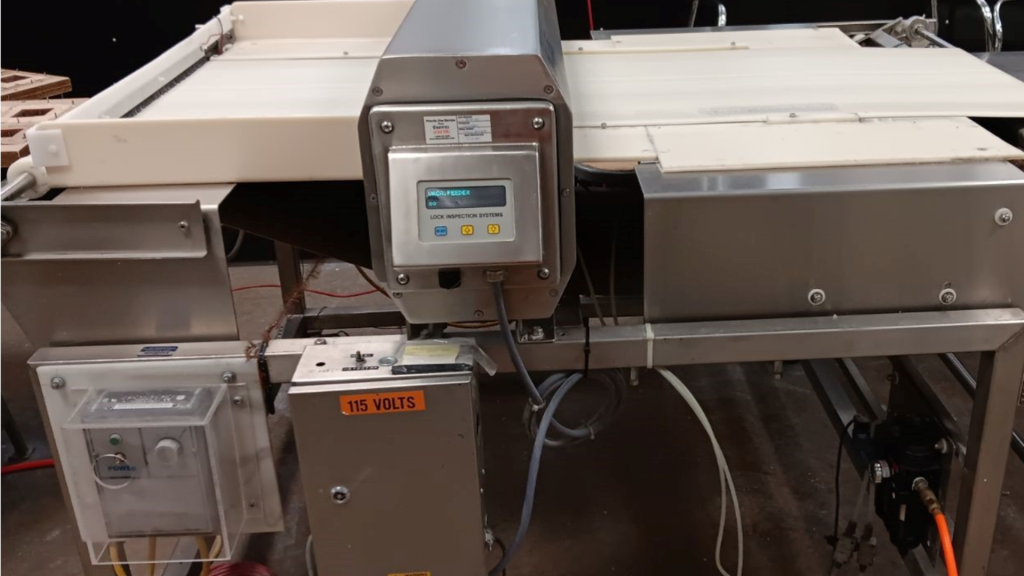
Foreign Material Detection and Removal Comparison
Foreign Material Removal Devices (Ideal)
- Filters, Sieve (Best)
- Screens
- Magnets (not a food safety control)
Foreign Material Detection Devices (Not Ideal)
- X-Ray
- Metal Detection
- Optical Sorter
- Visual Inspection (Worst)
Verification actions:
- Installation Checks
- Test Piece Checks (X-Ray, Metal Detector, Optical Sorter)
- Visual Inspection Sign Off
Magnetic Separation
- Magnetic separation is used to protect equipment in line.
- They are installed following identified sources of potential metal (in ingredients or points of metal on metal contact)
- If a magnet picks up metal, we contact the Maintenance Tech, not the FDA
- Magnetic separation is not a substitute for metal detection.
Determining the Risks for Foreign Material Contamination
- Is there glass, metal or wood pieces in areas of the facility with exposed food?
- Has the facility found or received complaints of foreign material in product in the past? In the recent past?
- Do we have foreign material controls in place?
- Are those controls effective for all foreign materials?
Example Risk Assessment
Area under assessment –Pasteurized Juice Line
Frequency of Action under Assessment- Trained employees confirm placement of filter at the start of each batch and examine filter following completion of Bottle fill for Pasteurized Juice.
Risks Associated with Action- Glass from bottles, plastic, wood, metal, other objects from ingredients and facility
Severity for Foreign Material in Finished Pasteurized Juice: Med
Likelihood for Foreign Material in Finished Pasteurized Juice : Low
Controls in Place for Risk
Visual inspection by trained employees at all operational steps during juice processing (blending, straining, pasteurizer loading and unloading), and visual inspection is performed during the bottling process. Preventive maintenance is routinely conducted on all equipment and facilities to prevent equipment or facilities from being a source of foreign material contamination. A registry of all potential sources of foreign materials is maintained. All pasteurized juice passes through a 25-micron filter prior to bottling.
Product Safety Risk Assessment Outcome
Based on the use of a filter on all juice CCP) and the lack of any historical instance of foreign materials contaminating juice, it was determined that current filtration practices and visual inspection during fill are acceptable as foreign materials control. If there is ever an increase in foreign material contamination events, especially for metal, additional controls such as x-ray or metal detection would be considered.
Metal Detection and X-Ray
- When product has foreign material in it, it is not safe and may not be shipped
- Every time a metal detector or X-ray goes off during operations, a corrective action and investigation is required
- This means speaking up every time. Let your supervisor know, let a manager know
- NO EXCEPTIONS
- ALL PRODUCT MUST BE HELD DURING THESE INVESTIGATIONS
- ANY PRODUCT WITH METAL SHOULD BE THROWN AWAY
Verification vs. Validation
For foreign material detection equipment in manufacturing, validation is the initial scientific assessment to prove the technology can effectively control a contaminant hazard to an acceptable level, while verification is the ongoing process to ensure the equipment continues to perform as validated, with testing methods like routine monitoring of sensitivity and performance.
Performing the Metal Detector Checks- Verification
When each test piece is run through the machine, when the machine alarms and the belt stops, that means the machine is working, and metal pieces specified will stop the machine. Checks must be done on time every time:
That means:
- The first package of the day
- Before breaks & after breaks
- At least every hour
- The last bag of the day
- Product changes
Validation of Metal Detector Checks
Each wand must be checked, one at a time, each time a check is performed
Wand should be placed within the product when performing checks – do not place the wand uncovered on the belt
We need to see if metal can be detected in product, not by itself!
Costco Foreign Material Detection Requirements
Costco Food Safety GMP V3.0 – September 1, 2025
“All manufacturing operations must have a foreign material detection system (metal detection, x-ray, sieves, optical sorter etc.) installed, selecting the most effective solutions available for their products and processes”.
“Suppliers must justify their choice with documented scientific and technical evidence that proves the system’s effectiveness in reducing contamination”.
“- Shell Eggs, whole raw agricultural commodities, whole roasted coffee beans, whole muscle meats, whole or portioned in shell crab; whole lobster tails, Whole, eviscerated fish, hand portioned fish fillets and peeled/de-headed shrimp, and packaging products will be exempt from the foreign material device requirement”.
“Operations that utilize a physical barrier (e.g. screen, filter, sieve) that’s appropriately sized and placed just prior to packaging will be exempt from the foreign material device requirement”.
BRCGS Foreign Material Detection Requirements
BRCGS is one of the Global Food Safety Intiative (GFSI) benchmarked food safety certification schemes that is well known in the food industry.
BRCGS has foreign material detection requirements, such as this excerpt from BRCGS Issue 9 Clause 4.10.1.1-
“A documented assessment in association with the food safety plan shall be carried out on each production process to identify the potential use of equipment to detect or remove foreign-body contamination”. Typical equipment to be considered may include:
- filters and sieves
- metal detection and X-ray detection equipment
- magnets
- optical sorting equipment
- other physical separation equipment (e.g. gravity separation, fluid bed technology).
SQF Foreign Material Detection Requirements
SQF is a different standard of the Global Food Safety Initiative (GFSI) benchmarked food safety certification schemes and is the most popular in the US.
SQF does not have foreign material detection requirements, but does require that responsibilities and methods are documented for all controls in place found in the GMP Modules of each code
SQF also allows GMPs from each module, including foreign material controls to be exempted by risk assessment based on clause 2.4.2.1:
“The site shall ensure the applicable Good Manufacturing Practices described in Module 11 of this Food Safety Code are applied or exempted according to a written risk analysis outlining the justification for exemption or evidence of the effectiveness of alternative control measures that ensure food safety is not compromised”
If you have more questions not answered in this webinar, you can contact us for a free consultation:
Info@kellermanconsulting.com or (800) 535-1376

Related Blog Posts

Episode 2: Deciding How often to Perform Environmental Monitoring
The most important issue in determining the frequency of swabbing in a…

Episode 5: Tests of the Traceability System and Recall Program
A traceability exercise is a test of a site’s entire traceability system…

Episode 1: Foundations of Supplier Approval
We address who should be leading assessment and approval activities, and how…

Food Facility Restrooms: Requirements and Best Practices
What are the Restroom Requirements for GFSI Facilities? Several GFSI schemes (i.e….